
Strategy
Our five strategic pillars
Objectives, areas of intervention, planned approaches, expected outcomes and stakes: GNRC-SA’s framework for action.
GNRC-SA organises its work around five fundamental pillars, designed as an integrated framework: each contributes to turning resources and capital into concrete sustainable development projects.
The information below describes GNRC-SA’s strategic orientations, planned approaches and targeted outcomes. It does not describe completed achievements.
Pillar IIT
Industry and processing
Processing locally to create more value.
Specific objective
To position GNRC-SA as a leading industrial player in the Republic of Guinea and across Africa, able to assess, structure, finance and deliver large-scale projects, with particular emphasis on building value chains that support sustainable development.
Areas of intervention
- Large-scale industrial and processing projects
- Integrated industrial ecosystems
- Industrial processing units
- Semi-finished and finished products
- Partnerships and technology transfer
- Training and skilled jobs
Planned approaches
- Identify or design major industrial and processing projects likely to have a positive impact on the national and continental economy.
- Develop industrial ecosystems aimed at significantly reducing dependence on exports of unprocessed raw materials.
- Establish and develop industrial processing units, supported by training and the transfer of the necessary skills.
- Create and optimise value chains to increase the share of semi-finished and finished products in exports.
- Build national and international industrial partnerships, in particular to introduce advanced processing technologies.
- Contribute to the creation of skilled jobs in the industrial sector.
Expected outcomes
- Large-scale industrial and processing projects identified or designed, then made operational, to the benefit of the economy.
- Industrial and processing ecosystems developed.
- Functioning industrial units helping to reduce dependence on raw exports.
- Value chains created and optimised, generating better returns.
- Strong partnerships based on mutual trust.
- Skilled jobs created.
Economic and development stakes
- Increasing the value added locally rather than exporting unprocessed raw materials.
- Diversifying the economy and strengthening its resilience.
- Developing skills and skilled employment.
- Increasing export earnings through processed products.
Pillar IIMRN
Mining and natural resources
Developing Guinea’s mining potential responsibly.
Specific objective
To support and structure high-potential mining projects, particularly in bauxite and gold, by creating dedicated value chains that promote responsible, sustainable and high value-added extraction.
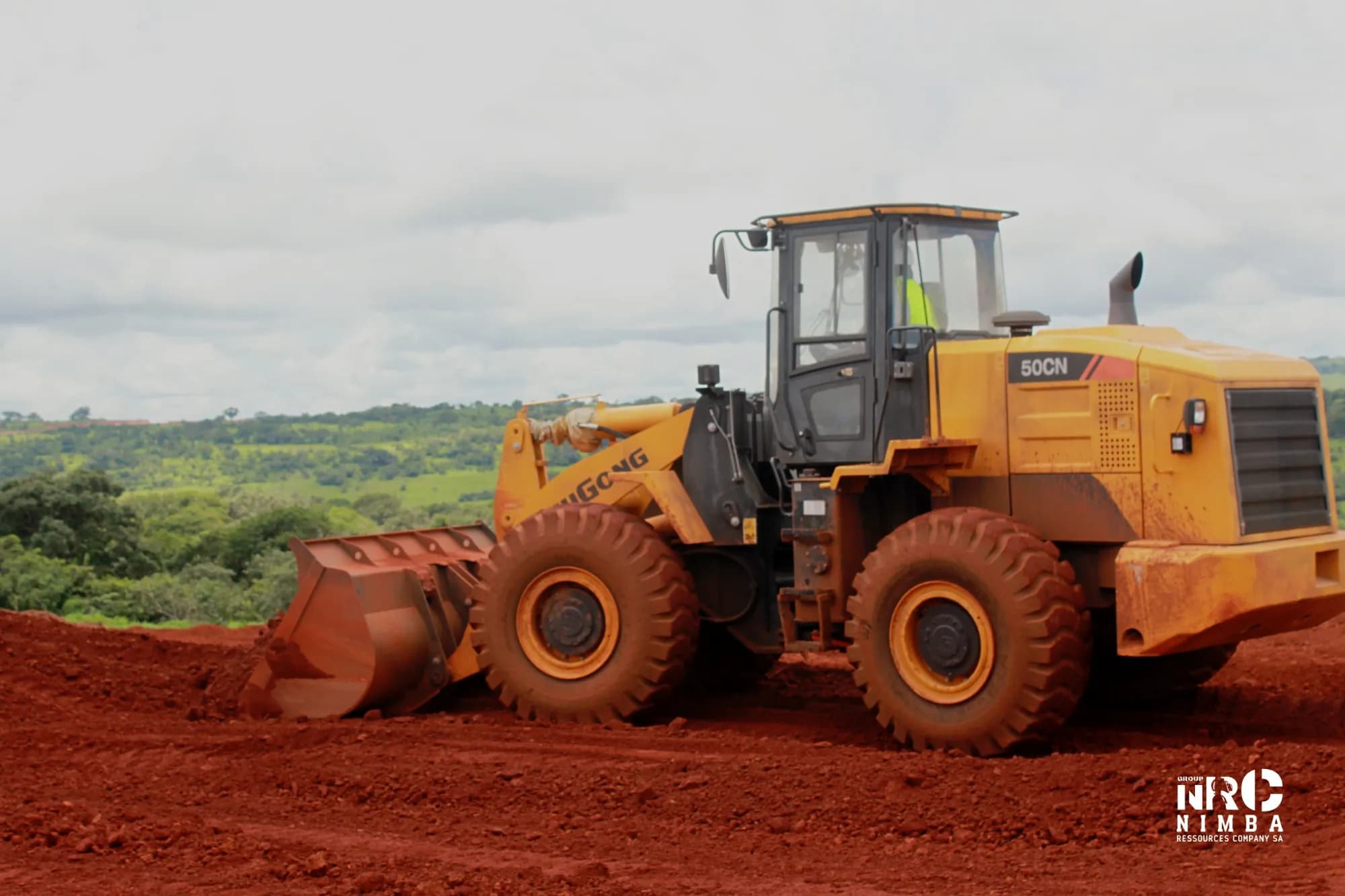
This pillar lies at the heart of GNRC-SA’s strategy, which aims to take part in the responsible development of Guinea’s subsoil, regarded as one of the richest in the world.
Guinea’s mining sector at a glance
- of gold shipped abroad from 17 to 23 January 2026 (240 kg of industrial gold and 1,086 kg of artisanal gold)
- 1,326 kgof gold shipped abroad from 17 to 23 January 2026 (240 kg of industrial gold and 1,086 kg of artisanal gold)
- of bauxite shipped from the relevant ports in 2025
- 182.8 Mtof bauxite shipped from the relevant ports in 2025
National sector data — These figures relate to Guinea’s mining sector as a whole; they are not results achieved by GNRC-SA.
Areas of intervention
- Bauxite and gold
- Mining value chains
- Specialised mining services
- Local ore processing
Planned approaches
- Initiate, in accordance with applicable regulations, the procedures to obtain mining permits for strategic minerals.
- Create mining value chains.
- Develop specialised mining services.
- Promote local processing of ores to increase national value added.
Expected outcomes
- Mining permits obtained.
- Access to high-potential mining concessions.
- Mining partnerships developed.
- Natural resources developed with revenue sharing.
- In the long term, becoming a major mining company in the Republic of Guinea.
Economic and development stakes
- Increasing the national value derived from mineral resources.
- Promoting responsible and sustainable extraction.
- Sharing the revenue generated by resource development.
- Strengthening the mining sector’s contribution to national development.
Pillar IIIEI
Energy and infrastructure
Reliable infrastructure and energy to drive development.
Specific objective
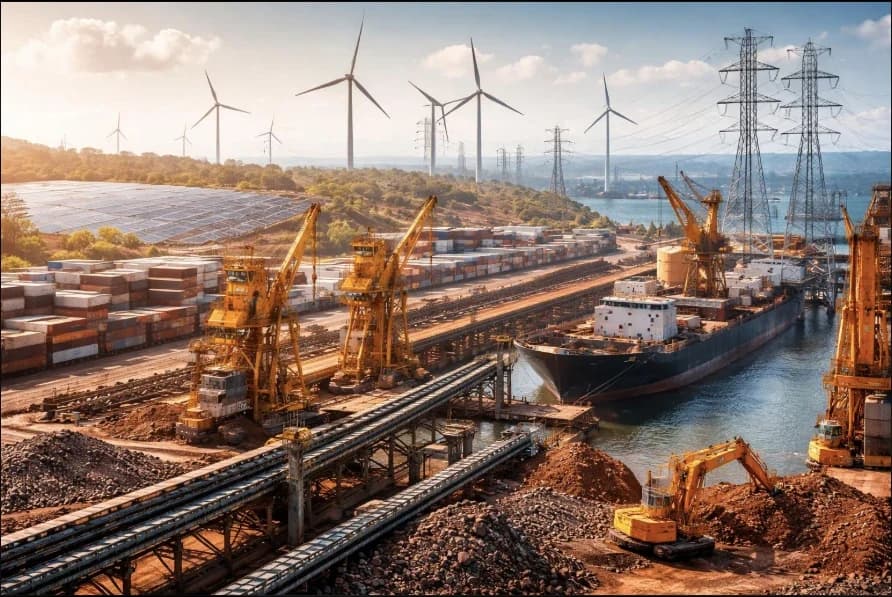
To develop essential infrastructure solutions and contribute to building distribution networks for hydrocarbons and electricity through high-potential projects.
Areas of intervention
- Development infrastructure
- Industrial and port logistics
- Hydrocarbon distribution
- Industrial and rural electrification
- Renewable energy
Planned approaches
- Take part in the drive to build development infrastructure.
- Contribute to the design and planning of an autonomous industrial port logistics hub.
- Contribute to developing hydrocarbon distribution networks and to industrial and rural electrification.
- Organise and finance feasibility studies for the construction of a storage and loading depot for petroleum products and derivatives.
Expected outcomes
- Lower national logistics costs.
- More efficient industrial and mining operations.
- Smoother exports of finished products and raw materials.
- Local and foreign investors attracted by reliable, robust infrastructure.
- Stabilised revenues.
- Renewable energy systems developed.
Economic and development stakes
- Removing the logistics and energy constraints that hold back industrialisation.
- Improving the competitiveness of industrial and mining sectors.
- Expanding access to electricity in industrial and rural areas.
- Strengthening the country’s attractiveness to investors.
Pillar IVAI
Agro-industry
Processing agricultural produce locally to strengthen food sovereignty.
Specific objective
To make agro-industry a major driver of sustainable value chains by processing agricultural produce locally, in order to strengthen food sovereignty, reduce imports and expand exports.
Areas of intervention
- Processing of rice, cassava, maize, tropical fruit and vegetables
- Integrated agricultural value chains
- Reducing post-harvest losses
- Regional and international markets
- Strengthening producers and their organisations
Planned approaches
- Set up agro-processing units (rice, cassava, maize, tropical fruit, vegetables, etc.).
- Develop integrated agricultural value chains: production, storage, processing and distribution.
- Structure and develop local and international partnerships.
- Significantly reduce post-harvest losses through appropriate infrastructure.
- Support, structure and develop regional and international agricultural markets.
Expected outcomes
- Large-scale agricultural processing units established and operational.
- Structured, functioning agricultural value chains for most sectors.
- Significantly strengthened food security.
- Structured local and international partnerships supporting export growth.
- Agricultural and industrial jobs created and sustained.
- Producers and their organisations trained, with stronger skills.
- Improved, stable and regular incomes for producers and their organisations.
- A stable and resilient agricultural sector.
- Growing demand for agricultural products met in line with national and international standards.
- A more stable and better developed national economy.
Economic and development stakes
- Strengthening food sovereignty and food security.
- Reducing dependence on imports.
- Sustainably improving producers’ incomes.
- Creating agricultural and industrial jobs.
Pillar VTI
Technology and innovation
Innovation serving performance and transparency.
Specific objective
To integrate technology and innovation as cross-cutting tools for performance, governance and competitiveness, serving energy, industrial, mining and agricultural projects.
Areas of intervention
- Digital project management
- Traceability, quality and compliance
- Digital value-chain platforms
- Logistics, storage and flow optimisation
- Fintech and data solutions
- Models replicable at regional scale
Planned approaches
- Digitise all project operations: management, monitoring, evaluation and reporting.
- Address traceability, quality and standards-compliance issues for more reliable and efficient exports.
- Set up digital platforms to better manage the value chains created.
- Develop technology tools to manage logistics, storage and flows.
- Develop fintech and data solutions to facilitate access to finance and strengthen transparency.
- Design models that can be replicated at regional scale.
Expected outcomes
- Technology as a source of competitive advantage.
- Better designed and better managed projects, attractive to institutional and strategic investors.
- Co-investments in technology platforms developed and secured.
- Access to scalable, high-potential projects.
- Strong synergies with other development stakeholders.
- Lasting positioning in each area of intervention.
Economic and development stakes
- Transparency and accountability in project management.
- Easier access to finance.
- More reliable exports through traceability and standards.
- Competitiveness of value chains.
Contact
Let’s discuss your needs.
Our team can be reached by phone, by email or through the contact form.